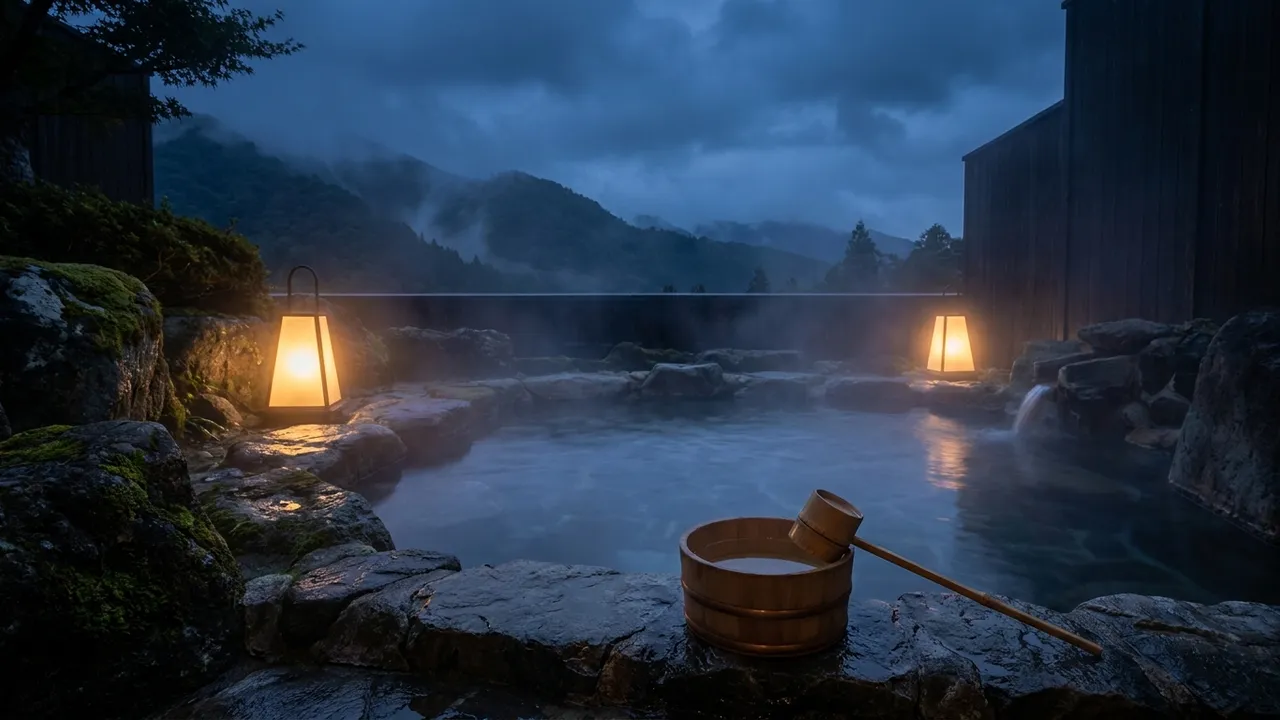
An onsen (温泉) is a Japanese hot spring, and soaking in one is one of the most ordinary pleasures in Japan. People go after work, on weekends and on family trips. Plenty of Australians try one on holiday and come home wondering why a bath here never feels quite the same.
You can't bring the spring home, but most of what makes an onsen feel the way it does can be copied in an ordinary bathtub. This guide covers what onsen are, how the etiquette works, what research on warm baths actually shows, and how to set one up at home.
What Is an Onsen?
An onsen is a bath fed by water from a natural hot spring. Japan sits on the Pacific Ring of Fire and has close to 28,000 hot spring sources, according to its Ministry of the Environment. Hot springs appear in Japan's oldest written histories, from the 700s, and towns like Beppu, Hakone and Kusatsu grew up around them.
Every spring's water is different. Some smell faintly of sulphur. Others are clear and alkaline and leave skin feeling smooth and slippery, which is why alkaline springs are often nicknamed bijin-no-yu (美人の湯), "beauty baths".
There's also an older custom called tōji (湯治): staying at a hot spring for a week or more to rest. Farmers traditionally did it in the quiet months between seasons, and some inns still offer long, simple stays for it.
Onsen Etiquette
The rules all come down to one idea: keep the water clean and calm for everyone. Japan's national tourism organisation lists the basics:
- Wash first. Undress completely, then soap up and rinse off at a washing station before you get in. The bath is for soaking, not washing.
- Pour water over yourself. Scooping hot water over your body before you get in, called kakeyu, helps you adjust to the heat.
- Keep your towel and hair out of the water. Fold the small towel on your head or put it at the edge. Tie long hair up.
- Keep it quiet. Speak softly, leave your phone outside, and don't swim or splash.
- Don't bathe after drinking. Alcohol and hot water don't mix.
- Get out if you're too hot. Sit out for a while and have a drink of cool water, then go back in if you want to.
What Research Says About Warm Baths
A lot of big claims get made about hot springs. The research on plain warm baths is more modest, and more useful.
In a 2018 Japanese trial, 38 adults spent two weeks soaking in a 40°C bath for 10 minutes a day, and two weeks only showering. After the bathing weeks they rated their fatigue, stress and general health better than after the showering weeks. It was a small study, and people knew which weeks they were bathing, but it matches what most bath lovers would tell you.
Magnesium is where claims run ahead of the evidence. Epsom salts are magnesium sulphate, and you'll often read that your skin soaks it up. A 2017 review concluded that this isn't scientifically supported yet. Our magnesium bath guide goes into the details.
For skin, the onsen effect people notice is mostly about feel. Alkaline water leaves skin smooth. The catch is that long soaks in very hot water dry skin out, and that part is easy to avoid at home.
How to Recreate an Onsen at Home
Wash before you soak
Shower first, the way you would at an onsen. You get into clean water, and you don't need soap or bubble bath in the tub, which is gentler on dry skin.
Get the temperature right
Aim for 38 to 40°C. Many onsen run a little hotter, but at home a slightly cooler bath lets you stay in longer and is easier on your skin. A cheap bath thermometer takes the guessing out of it.
Soften the water
You can't copy a spring's chemistry, but you can get closer to the feel. Bicarb soda makes bath water slightly alkaline, which gives you a mild version of that bijin-no-yu smoothness. Epsom salts are the usual base for a mineral bath.
Soak for 15 to 20 minutes
That's long enough to warm right through. If you start to feel light-headed, get out slowly and sit down. How often to repeat it depends on your skin, which we cover in how often to take a salt bath.
Set up the room
Dim the lights, leave your phone outside, and crack a window if it gets too steamy. The quiet is a big part of what makes an onsen feel the way it does.
Rest after
At an onsen, people cool down in a rest area with a cold drink before doing anything else. At home, pat dry, moisturise, drink a glass of water, and give yourself ten minutes before going back to screens.
Who Should Check First
- Heart conditions or low blood pressure. Hot water puts real load on your circulation. Check with your doctor and keep the water moderate.
- Pregnancy. Talk to your midwife or doctor, and keep the water warm rather than hot.
- Broken or irritated skin. Salt stings. Wait until it has healed.
Using Miyomi
Miyomi is our take on an onsen soak at home: Epsom salts and bicarb soda for the feel of the water, with cold-pressed yuzu peel oil and sencha green tea extract for the scent. Two scoops make a full bath.
Join the list and the first 100 get a founder code for $10 off.