For most adults, somewhere between 37 and 40 degrees. Around 40 is the top of comfortable for a long soak. Japan, which takes its baths more seriously than anywhere, advises staying at 41 degrees or below and keeping hot soaks to about ten minutes. For babies and children, 37 to 38.
That is the short version. The rest is how to hit those numbers without a thermometer, how long to stay in, and who should run it cooler.
Temperature by What You Want
- 37 to 38 degrees: gentle. Close to body temperature. Right for children, for anyone pregnant, for dry or sensitive skin, and for a long soak on a warm night. It feels barely warm when you first get in.
- 38 to 40 degrees: the everyday soak. Warm enough to feel it, cool enough to stay in for fifteen to twenty minutes. This is where we would put most baths, and where bath salts dissolve without fuss.
- 40 to 41 degrees: short and hot. The classic Japanese bath. Keep it to around ten minutes. A bath around 40 degrees, one to two hours before bed, is also the version sleep research has looked at most.
- Above 41 degrees: don't. Japan's Consumer Affairs Agency draws its line at 41 for a reason, which we come to below.
Why Hotter Isn't Better
A hotter bath feels like more of a good thing. Past a point, it is just more strain. The hotter the water, the faster your core temperature climbs, the harder your heart works, and the wider your blood vessels open to shed the heat. That is why a very hot bath can leave you light-headed when you stand up.
Japan knows this better than anywhere. Around 70 percent of people there take a bath every day in winter, and researchers estimate that roughly 19,000 people a year die in bath-related incidents, most of them older, most of them in winter. The Consumer Affairs Agency's advice is plain: water at 41 degrees or below, no more than ten minutes in it, and a warm bathroom and changing area before you undress, so the jump from cold air to hot water is smaller.
Hot water is also harder on skin. It strips more of the natural oils that keep skin comfortable, which is why dry skin does better in a warm bath than a hot one.
"The right bath is one you could happily stay in for twenty minutes. If you are counting down until you can get out, it is too hot."
How to Check Without a Thermometer
- Use your wrist or elbow, not your fingers. Hands are used to hot water from the washing up and will tell you a bath is fine when it isn't.
- Mix before you test. Hot water rises, so the surface can be warmer than the water lower down. Swirl the whole tub, then test.
- Watch your skin. If your skin flushes pink where it touched the water, it is too hot for a child, and probably hotter than you want for a long soak yourself.
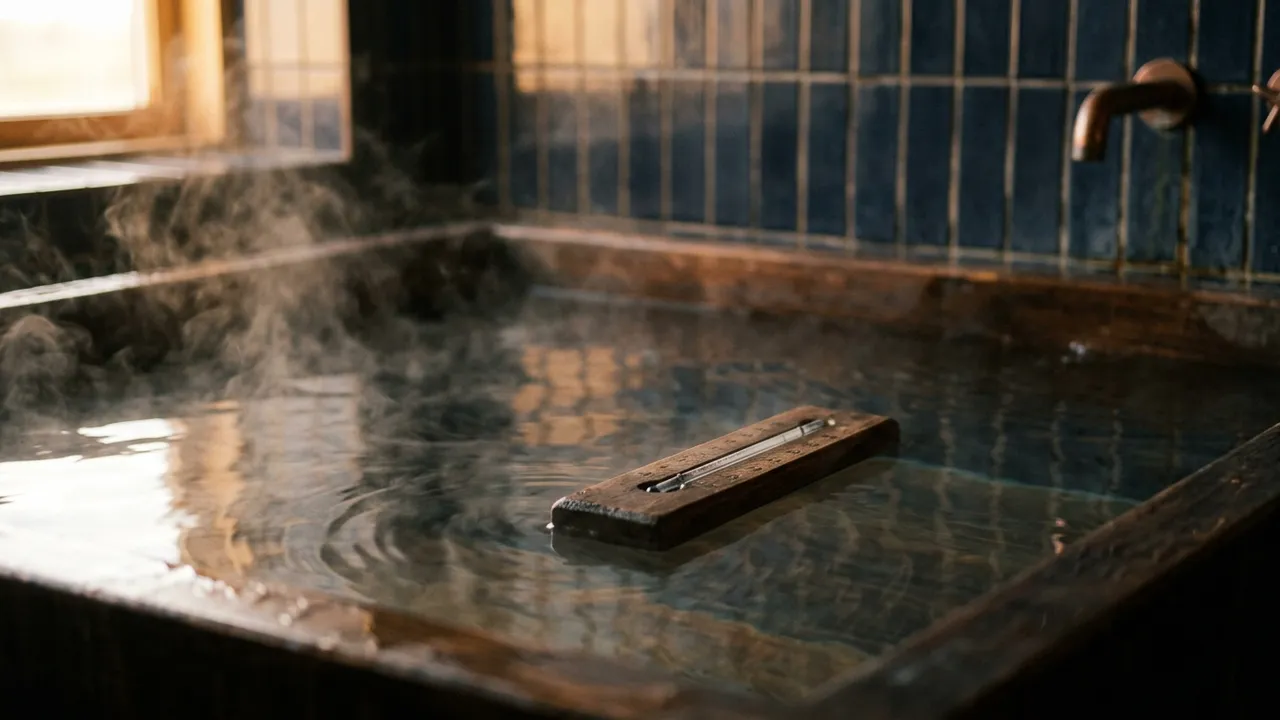
- Or buy a thermometer. A floating bath thermometer is cheap and ends the guessing. After a week you will know what 39 degrees feels like.
Your Hot Tap Isn't a Guide
Your hot water system keeps water stored at 60 degrees or more to control bacteria. In most newer Australian homes, a tempering valve mixes that down so the bathroom taps deliver no more than about 50 degrees. Older homes may not have one.
Either way, water straight from the hot tap is far too hot to sit in. At around 60 degrees, a child can be badly scalded in under a second. Run hot and cold together, turn the cold on first and off last, and test before anyone gets in.
How Long to Stay In
Fifteen to twenty minutes at 38 to 40 degrees suits most people. The hotter the water, the shorter the soak: at 41, ten minutes is plenty. Much beyond half an hour, even warm water starts to leave skin drier than it found it.
When you get out, stand up slowly and hold onto something. Have a glass of water nearby, and moisturise while your skin is still damp.
Who Should Run It Cooler
- Anyone pregnant. The concern is raising your core temperature, especially in the first trimester. Common guidance is to keep the bath at or below 37 degrees and skip spas and saunas altogether. Check with your midwife or GP.
- Babies and children. 37 to 38 degrees, checked every time, and never left alone in the bath, not even for a moment.
- Older people, and anyone with a heart condition or low blood pressure. Warm the bathroom first, keep the water at 40 or below, keep it short, and don't bathe straight after a big meal. Ask your GP if you are unsure.
- Anyone who has been drinking. Alcohol and hot water both lower blood pressure, and together they are how people faint in the bath. Wait until the morning.
On a Thirty Degree Night
An Australian summer changes the maths. When the air is hot, a 37 degree bath feels properly warm and anything hotter is hard work. Run it close to body temperature, open the window or put the fan on, and have it later in the evening once the house has cooled. Salts still dissolve in cooler water if you stir them in under the running tap, or dissolve them in a jug of hot water first.
Using Miyomi
Miyomi is made for the everyday soak: about two scoops, a generous half cup, under a tap running at 38 to 40 degrees, swirled until the bottom of the tub feels smooth. Then twenty minutes, door shut.
We have not opened yet. The first 100 on the waitlist get a founder code for $10 off. Join the waitlist.
Sources
- Journal of Physiological Anthropology (2022): A review of Japanese-style bathing, its demerits and merits
- Raising Children Network: Safe bath temperature for babies and children
- Sleep Medicine Reviews (2019): Before-bedtime passive body heating by warm shower or bath to improve sleep
- Cleveland Clinic: What to know about taking a bath while pregnant