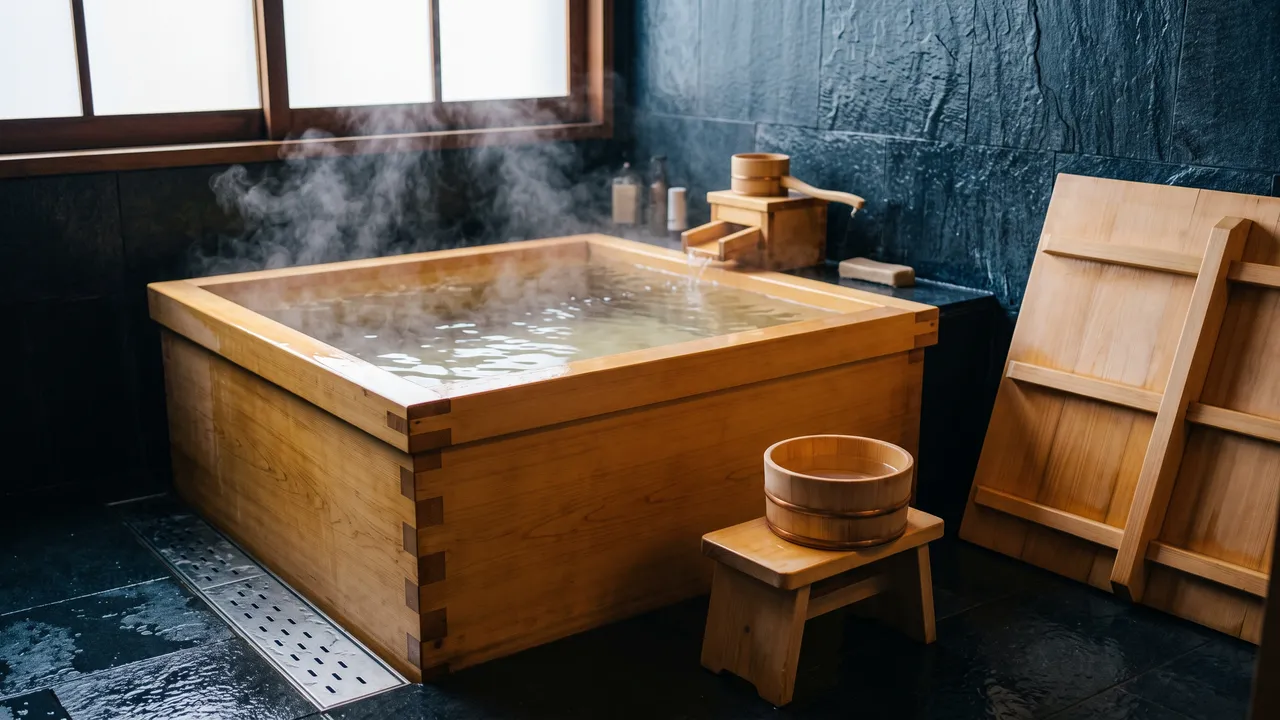
A Western bath is built for lying back. A Japanese one is built for sitting up, with the water at your shoulders. That's the idea behind the ofuro, or furo, the Japanese soaking tub: short, deep, and only ever used once you're already clean.
What Makes an Ofuro Different
- Depth over length. Instead of stretching out in a long, shallow tub, you sit upright in a short, deep one. A typical furo is around 60 cm deep, with straight sides rather than a sloped back.
- Wash first, then soak. You wash and rinse outside the tub, sitting on a small stool, before you get in. The tub is only for soaking and warming up.
- Shared water. Because nobody washes in it, the water stays clean, and a household traditionally shares one bath in turn, with a lid on between turns to hold the heat.
- Kept hot. The water usually sits around 38 to 42 degrees. Higher-end modern tubs in Japan have a reheating system, called oidaki, that filters and warms the same water back up.
Hinoki and Other Materials
The traditional ofuro is wooden. Hinoki, Japanese cypress, is the classic choice: pale, fine-grained and fragrant when warm and wet. Sugi, Japanese cedar, is the other traditional timber. Wood is beautiful but needs looking after: hinoki needs regular care and resealing, and outside Japan it is expensive because it has to be imported.
Modern furo are often acrylic, which keeps the deep, upright shape without the upkeep of timber. Wooden tubs are now mostly the luxury end of the market.
Living With One in Australia
- Weight. A deep tub full of water, plus a person, is heavy. Upstairs or on a timber floor, get a builder to check the floor before you buy.
- Water. Short doesn't always mean less water. A deep tub can hold as much as a standard bath or more, so compare capacities. Our guide to how much water a bath uses has the numbers.
- Hot water. Filling a deep tub can empty a small hot water tank. Check your system before you commit.
- Timber care. Wood moves with dry air and air conditioning. Follow the maker's advice on keeping a timber tub between uses, and check with them before adding bath salts or any other additive.
- Getting out. Deep tubs are harder to climb out of. A step or a built-in seat helps, and for older bathers it matters.
"An ofuro is less about the tub than the order: wash, then soak, then rest."
Getting the Feel in an Ordinary Bath
You don't need a new tub to borrow most of what makes an ofuro feel different. Much of it is the order things happen in.
- Wash first. Shower before you get in, so the bath is only for soaking.
- Fill it deep, around 40 degrees. Our guide to bath temperature explains why not hotter.
- Sit up. Bend your knees and sit upright with the water as high as your bath allows, rather than lying back.
- Hold the heat. A folded towel or a bath board across the far end keeps the water warm longer, the way a lid does.
- Keep it quiet. Low light, no phone, ten to fifteen minutes.
- Stand slowly. Hot water can leave you light-headed, so get up slowly, then rest for a few minutes with a glass of water.
Our onsen at home guide covers the full ritual, and our guide to Japanese bath salts explains what goes in the water.
Where Miyomi Fits
Miyomi was made for this kind of bath. It's Epsom salt with bicarb soda, green tea extract and steam-distilled yuzu peel oil, so the water smells of the citrus Japan floats in its baths every winter. Fill the tub, wash first, then soak.
We have not opened yet. The first 100 on the waitlist get a founder code for $10 off. Join the waitlist.