Most bath salt packets say "add to bath water" and leave it there. That works if you have a tub and a free evening. If all you have is a shower, a spa bath, or sore feet after a long shift, you need a bit more to go on.
This guide starts with the standard soak, then covers every other way to use bath salts, including when you don't have a bathtub at all.
How to Use Bath Salts in the Bath
The method is simple. Most soaks that feel like nothing happened went wrong on the water temperature or the amount of salt, or the salt never dissolved.
- Run the water to 38 to 40 degrees. That's warm enough to relax into and cool enough to stay in for twenty minutes. Without a thermometer, test it with your wrist or elbow rather than your fingertips.
- Add the salts under the running tap. For a full bath, use a generous half cup. With Miyomi that's about two scoops. A tablespoon in a full tub is too diluted to notice.
- Swirl until the bottom feels smooth. Crystals sitting on the floor of the tub aren't doing anything, and they're uncomfortable to sit on.
- Soak for 15 to 20 minutes. Much past half an hour, warm water starts drying skin out instead of softening it.
- Stand up slowly. Warm water widens your blood vessels, and getting up quickly can leave you light-headed.
- Moisturise while your skin is still damp. Rinsing with plain water is optional, though worth doing if your skin feels tight or itchy afterwards. Pat dry and put moisturiser on within a few minutes. Our guide to bath salts for dry skin explains why the timing matters.
Can You Use Bath Salts With Bubble Bath?
Yes. Dissolve the salts first, then pour the bubble bath under the running tap so the foam builds. Whether it's a good idea for your skin is another matter, and we compare the two in bath salts vs bath bombs vs bubble bath.
What If the Water Isn't Very Hot?
Salts dissolve slowly in cooler water. Stir them into a jug of hot tap water until clear, then pour that into the bath.
How to Use Bath Salts in the Shower
You can't soak in a shower, so the salts spend far less time on your skin. You can still use them two ways: as a scrub, or as a warm pour-over.
As a Body Scrub
- Wet your skin first.
- In your palm, mix a small handful of salts with a little water or a few drops of body oil until it forms a loose paste.
- Rub it gently in small circles over rough spots: elbows, knees, heels and the backs of your arms. Pressing harder doesn't help.
- Rinse with lukewarm water, and moisturise once you're dry.
Once or twice a week is plenty. The American Academy of Dermatology notes that scrubs can be too irritating for dry, sensitive or acne-prone skin, and that retinoid creams, retinol and benzoyl peroxide all make skin more sensitive to exfoliating. It also suggests going easy if your skin tends to leave dark marks after a bug bite or a pimple.
Keep salt scrubs off your face, freshly shaved or waxed skin, sunburn, and anything cut or broken. If you mixed in oil, rinse the shower floor when you're done, because oily tiles are slippery.
As a Pour-Over
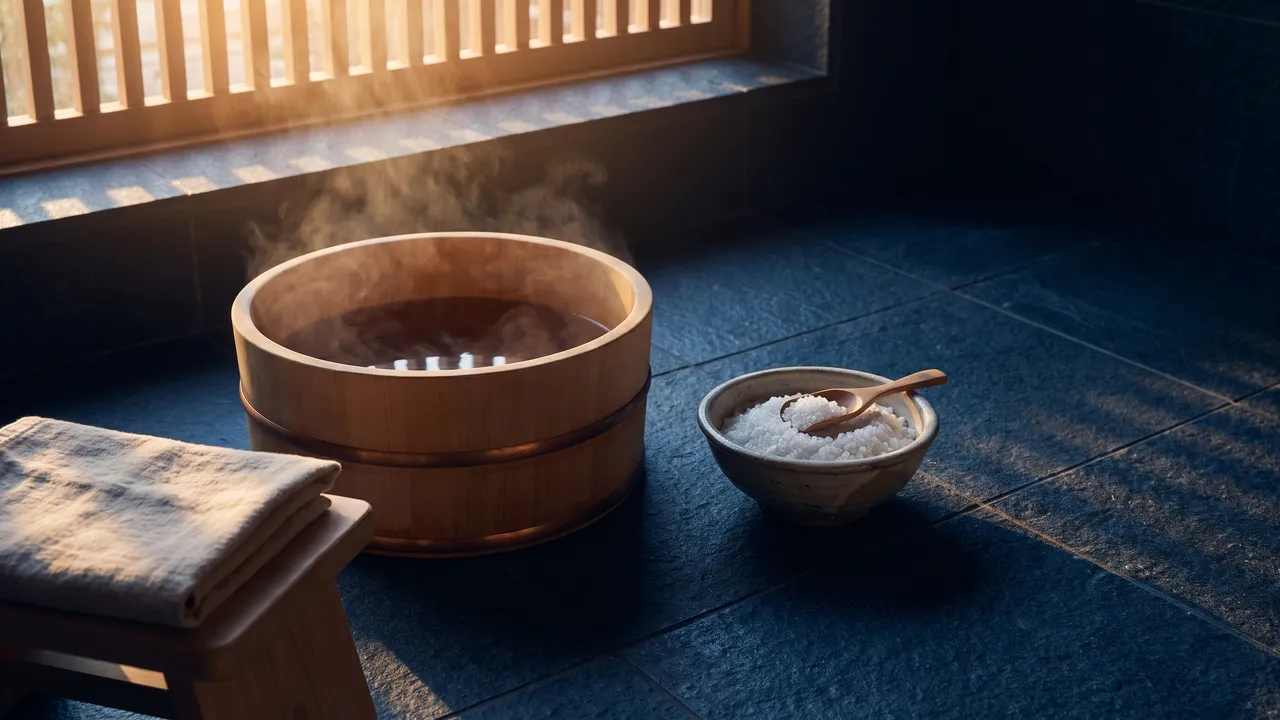
Before getting into an onsen, Japanese bathers pour hot water over themselves from a small basin, a habit called kakeyu. You can borrow the idea at home. Dissolve two or three tablespoons of salts in a bucket of warm water, stand in the shower, and pour it slowly over your shoulders and back with a jug. It won't do what a twenty-minute soak does, but you get the warmth and the scent in about five minutes. Our onsen guide has more on the ritual behind it.
How to Use Bath Salts Without a Bathtub
Plenty of apartments and rentals only have a shower. You still have options:
- A foot soak. A basin and a towel give you most of the ritual. Details below.
- A scrub or a pour-over in the shower, as above.
- A portable soaking tub. Foldable tubs made for small bathrooms sit in a shower recess. Check how many litres one holds before you buy, since your hot water system has to fill it.
How to Use Bath Salts for a Foot Soak
- Use a basin or tub wide enough for both feet, with water that reaches your ankles.
- Fill it with warm water, and test the temperature with your wrist or elbow before your feet go in.
- Dissolve two to three tablespoons of salts first.
- Soak for 10 to 15 minutes.
- Dry your feet properly, especially between the toes, where damp skin is prone to fungal infections. Moisturise your heels, but leave the skin between your toes dry.
Diabetes UK advises people with diabetes to avoid soaking their feet, because it makes the skin more likely to get damaged. Reduced feeling in the feet also makes it easy to misjudge how hot the water is. Wash and dry your feet instead, and talk to your GP or podiatrist before trying a foot soak.
Can You Use Bath Salts in a Spa Bath?
Usually, but read your manual first, because manufacturers don't agree. MTI Baths, for example, says water-soluble products like bath salts are fine in its whirlpool baths but advises against heavy bath oils. Other brands tell you to keep additives out of the tub altogether.
If your manual doesn't say either way, dissolve the salts completely, soak with the jets off, and run a clean or flush cycle afterwards the way the manual describes.
Outdoor hot tubs are a different case. That water stays in for weeks and is kept balanced with sanitiser, so don't add bath salts unless the manufacturer says you can.
Who Should Check First
- Pregnancy. Talk to your midwife or doctor, and keep the water warm rather than hot.
- Heart conditions or low blood pressure. A warm bath puts real load on your circulation. Check with your doctor, and keep the water moderate.
- Vulval irritation or thrush. Jean Hailes for Women's Health recommends avoiding perfumed bath products, and suggests a plain bath with bicarb soda or a handful of salt to soothe irritation. Most bath salts contain fragrance or essential oils, ours included, so use plain salt during a flare.
- Young children. The American Academy of Pediatrics advises keeping bubble baths and perfumed soaps away from children, since they can irritate the genitals and urethra. Keep scented salts for the adults.
- Broken skin or a flare-up of eczema. Salt stings open skin. Wait until it has healed, or ask your GP.
- Sensitive skin. Patch test first. Dissolve a pinch of salts in a little water, dab it on your inner forearm, and wait a day.
Using Miyomi
Miyomi is Epsom salts blended with bicarb soda, sencha green tea extract and cold-pressed yuzu peel oil. Two scoops make a full bath, so a 1kg pouch gives you 8 to 10 soaks. It goes a lot further if you mostly use it for foot soaks or scrubs.
Join the list and the first 100 get a founder code for $10 off.
Sources
- American Academy of Dermatology: How to safely exfoliate at home
- Diabetes UK: How to look after your feet
- MTI Baths: Whirlpool and air bath FAQs
- Jean Hailes for Women's Health: Vulval irritation and treatment
- American Academy of Pediatrics (HealthyChildren.org): Preventing urinary tract infections in children