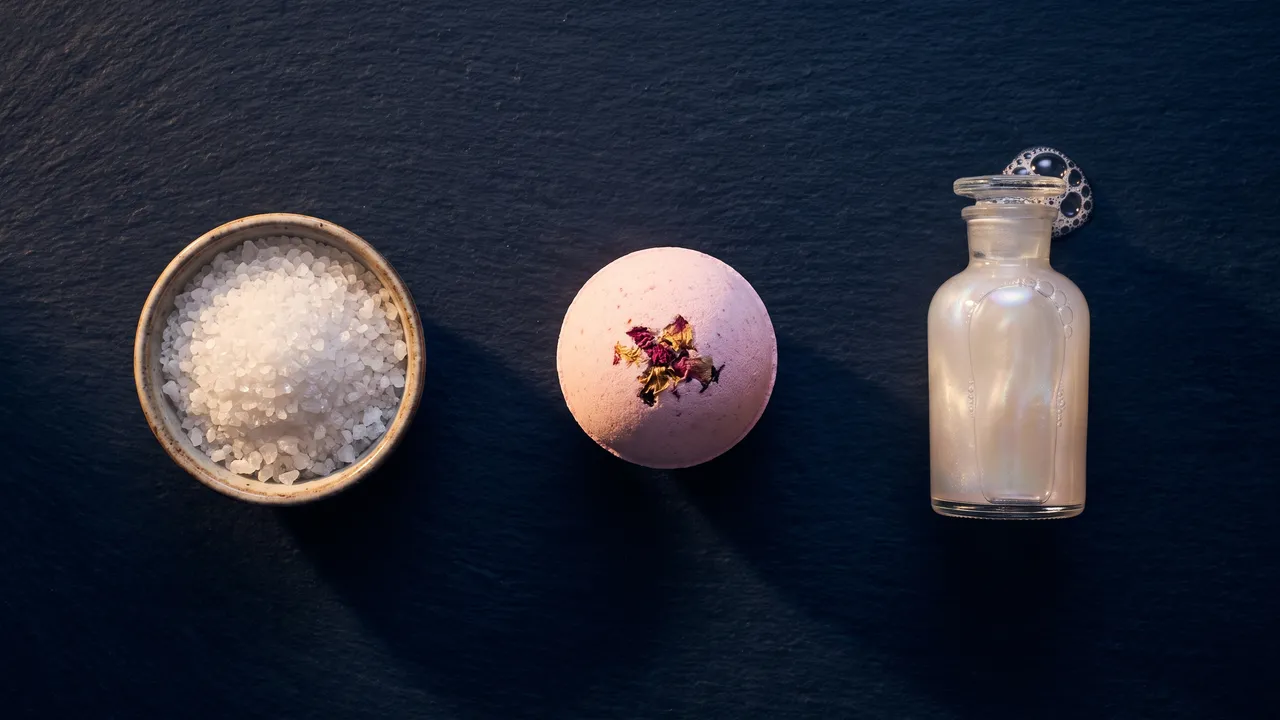
The bath aisle sells three things that go in the same tub: bath salts, bath bombs and bubble bath. They're marketed for the same moment, a long bath at the end of a long day, but they're made from different ingredients and they don't do the same things to your skin.
We make bath salts, so we aren't neutral. We've tried to be fair anyway, including about where salts fall short.
What's Actually in Each One
Bath Salts
Mineral salts that dissolve clear in the water. The usual ones are Epsom salt (magnesium sulphate), sea salt, Dead Sea salt and magnesium chloride. Many blends add essential oils, fragrance or dried botanicals. Salts change the mineral content of the water without foaming or colouring it. How much magnesium actually gets through your skin is still debated, and we go through the evidence in our magnesium soak guide.
Bath Bombs
A pressed ball of bicarb soda (sodium bicarbonate) and citric acid. When it hits water, the two react and release carbon dioxide, which is the fizz. Everything else in the recipe is there for how the bath looks and smells: fragrance, colourants, often cocoa butter or oils, and sometimes glitter or mica. The bicarb softens the water a little. The fizz itself is for show.
Bubble Bath
Liquid cleanser designed to foam. The bubbles come from surfactants, the same kind of ingredient that makes body wash and shampoo lather, along with fragrance and preservatives. Surfactants work by lifting oil off your skin. In a body wash you rinse them off within seconds. In a bubble bath you sit in them for twenty minutes.
Side by Side
| Bath salts | Bath bombs | Bubble bath | |
|---|---|---|---|
| Main ingredient | Dissolved minerals | Bicarb and citric acid, plus oils or butters | Foaming cleansers |
| Fragrance | Often, check the label | Usually | Usually |
| Colour or glitter | Rarely | Common | Sometimes colour |
| Left in the tub | Rinses away | Oily ring, sometimes colour or glitter | Soapy film |
| Dry skin | Gentlest, especially unscented | Oils can feel soft, fragrance and dyes can irritate | Most likely to leave skin drier |
| Best for | Regular soaks | An occasional treat | Foam, now and then |
Swipe the table sideways to see all three.
For Dry or Sensitive Skin
Whichever product you pick, fragrance is the biggest risk. DermNet estimates fragrance allergy affects around 1 percent of adults, and ranks it second only to nickel as a cause of allergic contact dermatitis.
Bath bombs and bubble bath are usually fragranced, and plenty of bath salts are too. Natural scents count. Yuzu peel oil, which is in our salts, is a citrus oil, and citrus oils contain limonene, one of the fragrance allergens that EU rules require to be named on labels. If you know you react to fragrance, an unscented product is the safer choice, whatever the format.
Beyond fragrance, the three differ. Bubble bath is the hardest on dry skin, because you're soaking in cleanser. Bath bombs vary: butters and oils can leave skin feeling soft, while dyes and glitter do nothing for it. Mineral salts are the simplest formula of the three, and there is some evidence that magnesium-rich salts help skin hold onto moisture, which we cover in bath salts for dry skin.
Patch test anything new. Dissolve a little in water, dab it on your inner forearm, and wait a day.
If You're Prone to Thrush or Irritation
This is where the three differ most. Jean Hailes for Women's Health advises avoiding perfumed soaps and bath products if you get vulval irritation, and suggests a plain bath with a cup of bicarb soda or a handful of salt to soothe it. Cleveland Clinic is blunter about bubble bath, calling it "never a good idea", including for adults.
If you get thrush or irritation easily, skip bubble bath and bath bombs. During a flare, use plain unscented salt rather than a scented blend, ours included.
For Kids
The American Academy of Pediatrics recommends keeping bubble baths and perfumed soaps away from children, because they can irritate the genitals and urethra and play a part in urinary tract infections. Scented bath bombs and salts raise the same concern, so keep children's baths plain.
What They Leave Behind
Conventional glitter is plastic, and in a bath bomb it washes straight down the drain. Some brands now use mica or plant-based glitter instead, so check the label if that matters to you. Oils and butters leave a slippery ring around the tub, and strong colourants can mark grout.
In a spa bath, heavy oils are the main thing manufacturers warn about, because they coat the pipes. Salts dissolve and rinse away, but check your manual before using anything. Our guide to using bath salts covers spa baths and hot tubs.
Can You Use Them Together?
Yes. Dissolve bath salts first, then add bubble bath under the running tap, or drop in a bath bomb once the tub is full. Keep in mind that each product brings its own fragrance, so a combination is more likely to bother sensitive skin than any one of them alone.
Which Should You Choose?
For regular soaking, a few times a week, mineral salts make the most sense. They're the simplest formula, they leave the least behind, and you get the warm water without sitting in cleanser. Go unscented if your skin is sensitive.
A bath bomb is fine as an occasional treat if your skin handles it. Pick one without glitter, and be wary of anything with a very strong scent.
Bubble bath is the one we'd use least, especially if your skin is dry or irritates easily.
Miyomi is Epsom salts, bicarb soda, tapioca starch, sencha green tea leaf extract and yuzu peel oil. There's no colour, no glitter, and no fragrance beyond the yuzu oil. Join the list and the first 100 get a founder code for $10 off.