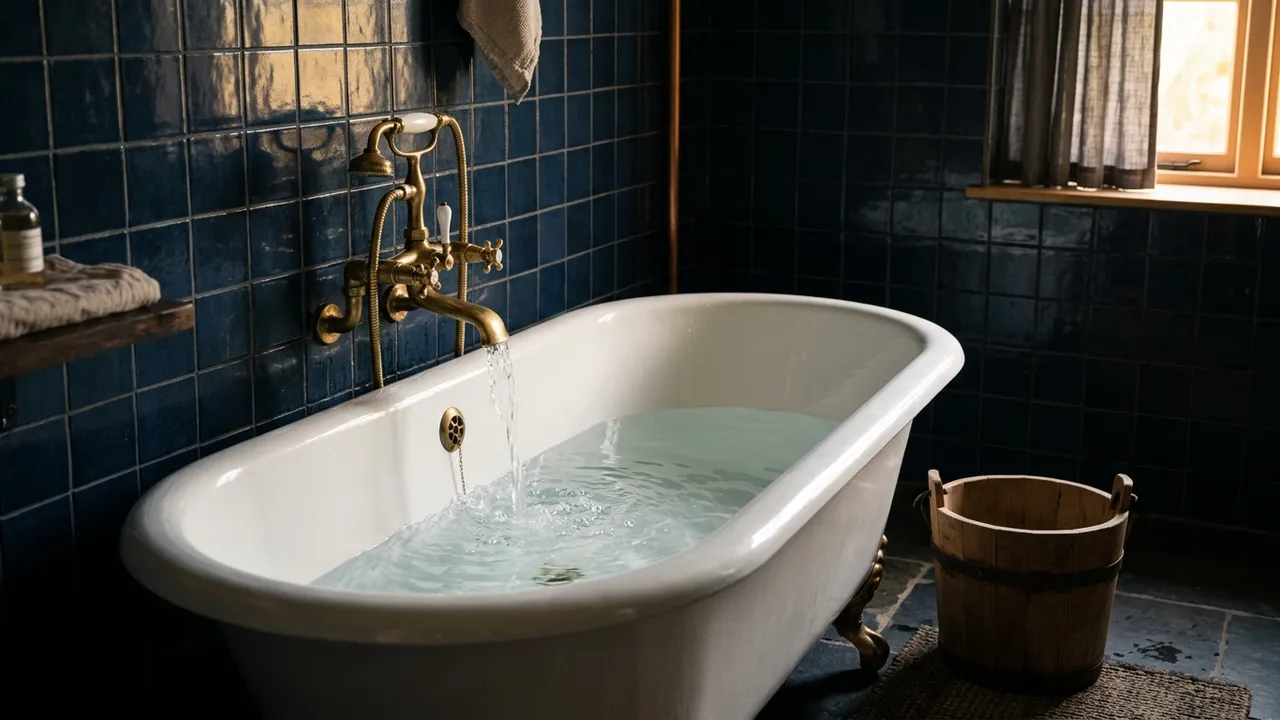
Most full baths in Australia come in somewhere around 100 to 150 litres, depending on the size of the tub and how deep you run it. A four-minute shower under a water-efficient showerhead uses about 36. So a bath does use more water than a quick shower, but not more than every shower, and the gap is smaller than most people assume.
Here are the numbers, how to work out your own, what the hot water costs, and what to do with the water afterwards.
Bath vs Shower, in Numbers
- Four-minute shower, efficient showerhead: about 36 litres. Water-efficient showerheads run at 9 litres a minute or less, and four minutes is the target WA's Water Corporation suggests.
- Seven-minute shower, efficient showerhead: about 63 litres. The average shower in WA runs over six minutes.
- A typical bath: about 100 to 150 litres. Less if you run it shallow, more in a big freestanding tub.
- Ten-minute shower, older showerhead: up to 200 litres. Older showerheads can run at up to 20 litres a minute.
So a long shower under an old showerhead can use more water than most baths, and a short one under a new showerhead uses about a third as much. Where you land depends on your bathroom and your habits, not on which one sounds more virtuous.
Hold a bucket under the shower on full for ten seconds and measure what you catch. Multiply by six for litres per minute. Nine or under is water efficient, the equivalent of a three-star WELS rating. If you get much more than that, a new showerhead will likely save more water than any change to how often you take a bath.
How to Measure Your Own Bath
The simple way is a bucket. Fill a 10 litre bucket, tip it in, and count until the bath is as deep as you would normally run it. Tedious, but you only need to do it once.
The quicker way is a tape measure. Measure the inside length and width of the tub at the waterline and the depth of the water, all in centimetres. Multiply them together and divide by 1,000 for litres. A bath 140 cm long and 55 cm wide, filled 20 cm deep, comes out at about 154 litres. Baths curve at the ends and the bottom, so treat your answer as a slight overestimate.
You Need Less Water Than You Think
When you get in, the water rises by roughly the volume of the part of you that is under it. A human body is close to the density of water, so a 70 kilogram adult has a volume of roughly 70 litres, and lying back in the bath puts most of that under the surface. That is why a bath run to the depth you want ends up far deeper once you are in it. Run it to about two thirds of the depth you want, get in, and top up with hot if you need to. It is the easiest saving in this whole article.
What the Hot Water Costs
The water itself is cheap. Heating it is not. Warming one litre of water by one degree takes about 1.16 watt-hours of energy. A 120 litre bath heated from 15 degrees to 40 needs about 3.5 kilowatt-hours before any losses from the tank and pipes, and more in winter, when the water comes in colder.
What that costs depends on your hot water system and your tariff. As a rough guide, at 35 cents a kilowatt-hour:
- Electric storage heater: about $1.20 a bath, less on an off-peak tariff.
- Heat pump: roughly a third of that, around 40 cents, because a heat pump moves heat from the air rather than making it.
- Solar hot water: much less on a sunny day, more if the booster has to kick in.
Gas depends on your gas rate, so check your own bill. The same maths applies to showers: 150 litres of hot water costs the same to heat whether it goes into a tub or down the drain over ten minutes.
The Japanese Way: Share It, Then Reuse It
In Japan, where around 70 percent of people take a bath every day in winter, the water question has a neat answer. Everyone showers before they get in, so the bathwater stays clean, and the whole household soaks in the same tub one after another, with a lid on between turns to keep it hot. One fill, several baths. Our guide to Japanese bath salts covers the rest of that ritual.
The water often gets a second life, too. Plenty of Japanese washing machines come with a small pump that draws leftover bathwater straight from the tub into the machine for the wash cycle.
You don't need a Japanese washing machine to borrow the idea. If two of you are having a bath on the same night, both shower first and share the water.
Can You Put Bath Water on the Garden?
Plain bath and shower water is among the lower-risk greywater a house produces, and Victoria's Better Health Channel lists it as suitable for bucketing onto the garden. Rules differ between states and councils, but the common guidance runs like this:
- Use it the same day. Untreated greywater should not be stored for more than 24 hours.
- Keep it off anything you will eat. No vegetables, fruit or herbs.
- Move it around. Don't pour it in the same spot every time, and water with fresh water regularly so salts don't build up in the soil.
A salt bath is a different question, because the water has salt in it. A generous half cup of bath salts in a full tub works out at roughly a gram of salt per litre, around thirty times weaker than seawater. Epsom salt, which is magnesium sulfate, is something gardeners add to soil in small amounts on purpose. But salt is exactly what the greywater guidance tells you to watch, and most blends, ours included, also contain bicarb soda, which adds sodium. Over time, sodium is what damages soil structure.
Our advice: if you bucket water onto the garden, use it from nights without salts. After a salt bath, the occasional bucket spread thinly over an established lawn is unlikely to matter, but pots, seedlings and veggie beds should get plain water, and the rest can go down the drain.
Making Every Bath Count
- Put the plug in before the water runs hot. The cold water that comes out first becomes part of the bath instead of going down the drain.
- Run it shallower and top up. Your body does a lot of the filling.
- Swap rather than add. A bath that replaces a long shower adds very little. A bath on top of your usual shower is what adds up.
- Make it one you look forward to. A bath you take properly once or twice a week is a better use of 120 litres than a lukewarm one you hurry through. Our guide to how often to take a salt bath has more on finding the right rhythm.
Using Miyomi
Miyomi is made for the bath you have decided is worth the water: about two scoops under the running tap, yuzu and green tea in the steam, twenty minutes with the door shut.
We have not opened yet. The first 100 on the waitlist get a founder code for $10 off. Join the waitlist.
Sources
- Water Corporation (WA): Saving water in the shower
- Water Efficiency Labelling and Standards scheme: What WELS star ratings mean
- Better Health Channel (Victoria): Greywater, recycling water at home
- YourHome (Australian Government): Wastewater reuse
- Journal of Physiological Anthropology (2022): A review of Japanese-style bathing, its demerits and merits