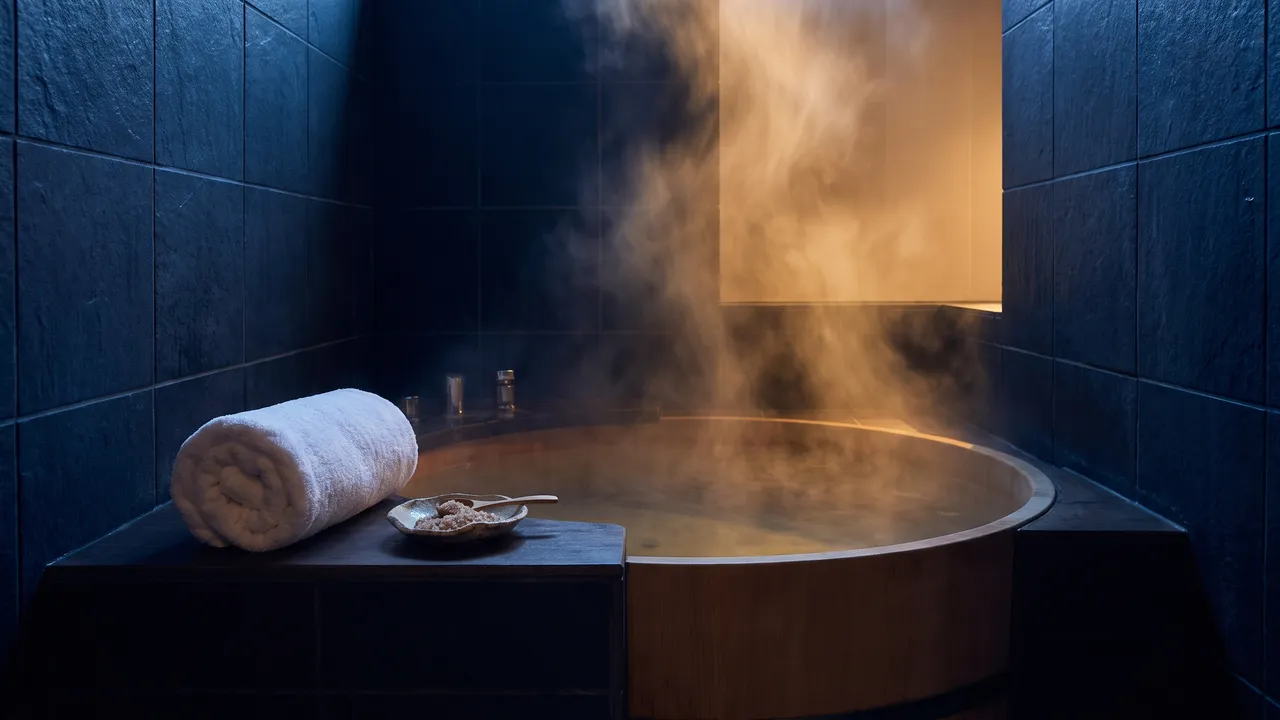
The soreness that arrives a day or two after a hard session has a name: delayed onset muscle soreness, or DOMS. It peaks somewhere between 24 and 72 hours after training, and it is not, as the old gym mythology had it, caused by lactic acid. Lactate clears within an hour of finishing.
What you are actually feeling is microscopic damage to muscle fibres and the inflammatory repair response that follows. That response is not a malfunction. It is how muscle adapts and gets stronger. The goal of recovery is not to shut it down, but to move through it comfortably and let the body do its work.
A warm mineral bath is one of the oldest and most pleasant tools for that. Here is what it does, what it does not do, and how to run one properly.
What a Warm Soak Actually Does
It Opens Circulation
Warm water dilates blood vessels near the skin and increases peripheral blood flow. More circulation through fatigued tissue means more oxygen and nutrients delivered and more metabolic waste carried away. This is the single most reliable mechanism at work, and it needs nothing more exotic than warm water and twenty minutes.
It Takes the Load Off
Buoyancy is underrated. Immersed to the chest, you carry a fraction of your body weight. Joints decompress, postural muscles that have been holding you upright all day finally stop working, and the low-grade guarding that comes with soreness lets go. This is why a bath feels different from lying on the couch.
The Magnesium Question
Magnesium is central to muscle function: it is the mineral that allows a contracted muscle to relax again, and it is involved in the energy production that repair depends on. Whether useful amounts cross the skin during a bath is another matter: a 2017 review found the evidence doesn't support it yet. We go through that in our guide to magnesium bath soaks. The warmth, the buoyancy and twenty minutes of doing nothing are the parts you can count on.
A warm bath won't repair muscle faster than rest would, and the magnesium in bath salts isn't proven to reach your muscles. What a bath gives you is warmth, weightlessness and twenty quiet minutes, which is a very pleasant way to spend a sore evening. That doesn't need overselling.
Hot Bath or Ice Bath?
This is the question people actually want answered, and the honest answer is that they do different jobs.
Cold immersion constricts blood vessels and blunts the inflammatory response. It is genuinely effective at reducing next-day soreness, which is why it is popular in competitive sport where you have to perform again tomorrow. But a growing body of research suggests that regularly icing straight after strength training may blunt the very adaptation you trained for. Inflammation is part of the signal that tells muscle to grow.
Warm immersion does the opposite: it increases blood flow, relaxes tissue, and shifts the nervous system out of its stress state. It does not interfere with adaptation, and it does considerably more for sleep.
A reasonable rule: if you are competing again within 24 hours and need to be functional, cold has a case. If you are training for strength, fitness or your own wellbeing and the goal is to feel human tomorrow, warm is the better default. Most people are in the second group.
"Ice is a tool for performing again tomorrow. Warmth is a tool for recovering properly. Most of us need the second one far more often than the first."
How to Run a Recovery Soak
- Temperature: 38 to 40 degrees. Warm enough to dilate vessels and relax tissue, not so hot that your heart rate climbs and the bath becomes work.
- Dose generously. A scant tablespoon in 150 litres of water is a gesture. Use a generous half cup of a magnesium-rich blend, roughly two scoops, and let it dissolve before you get in.
- Twenty to thirty minutes. Under fifteen and you are washing. Twenty is where the circulatory and stress effects settle in.
- Timing: a few hours after, or that evening. There is no need to sprint from the gym to the tub. An evening soak on a training day gives you the recovery and the sleep benefit in one.
- Move gently afterwards. A few easy stretches while tissue is warm and pliable does more than the same stretches cold.
- Then sleep. Sleep is when your body does much of its repair, and a warm bath an hour or two before bed suits it well, for reasons we unpack in our guide to the pre-sleep bath.
When to Skip the Hot Bath
- Acute injury. A fresh sprain, strain or anything visibly swollen in the first 48 hours does not want heat. Heat increases swelling. That is cold's territory.
- Broken or badly irritated skin. Salt in an open wound is exactly as unpleasant as the saying suggests.
- Cardiovascular conditions or very low blood pressure. Hot immersion is a real cardiovascular load. Check with a healthcare professional and keep temperatures moderate.
- Pregnancy. Talk to your midwife or doctor, and keep the water warm rather than hot.
Why the Japanese Got There First
None of this is new. Japan built a thousand-year culture around exactly this practice, and the daily evening bath, the furo, is still how a large part of the country ends the day. Farmers traditionally spent the quiet season resting at onsen hot springs after months of hard physical work.
Miyomi is built on that habit: Epsom salts and bicarb soda, with real yuzu peel oil and sencha green tea extract for the scent. One 1kg pouch is 8 to 10 proper soaks, which for most people is a fortnight of training weeks.
Join the list and the first 100 get a founder code for $10 off. Then run yourself a proper bath after your next hard session and notice the difference between a quick shower and a proper soak.