Of all the sleep advice in circulation, the humble bath is the most underrated. No supplement, no app, no wearable: just warm water, taken at the right time. Sleep researchers call it "passive body heating", and it is one of the few evening rituals with consistent clinical evidence behind it.
Done correctly, a bath before bed helps you fall asleep faster, spend longer in deep sleep, and wake less during the night. The key phrase is done correctly, because the timing and temperature matter more than most people realise.
The Science: It Works Because You Cool Down
Falling asleep is, physiologically, a cooling event. Your core body temperature naturally drops in the evening, and that decline is one of the strongest signals telling the brain it is time to sleep.
A warm bath seems like it should interfere with that. It does the opposite. Warm water draws blood to the skin, and when you step out of the bath, that dilated circulation dumps heat rapidly. Your core temperature falls further and faster than it would have on its own, amplifying the body's natural sleep signal.
A systematic review of 17 studies published in Sleep Medicine Reviews found that warm baths or showers of around 40 degrees, taken one to two hours before bed, shortened the time to fall asleep by an average of roughly ten minutes and improved reported sleep quality. Even ten minutes in the water was enough.
Getting the Ritual Right
Timing: One to Two Hours Before Bed
This is the detail most people miss. A bath immediately before bed leaves your core still warm when your head hits the pillow. The magic is in the cool-down, so finish your bath 60 to 120 minutes before you intend to sleep.
Temperature: Around 40 Degrees
Warm, not scalding. 38 to 40 degrees is the range used across the sleep studies, and conveniently the same range Japanese bathers have used for centuries in the evening furo, the daily home bath traditionally taken before bed rather than in the morning.
Duration: At Least Ten Minutes
Ten minutes is the evidence-based minimum for the sleep effect. Twenty minutes gives you time to properly unwind as well. If the ache is in your muscles rather than your head, a recovery soak runs a little differently.
Magnesium Is Optional
You'll often read that magnesium in the bath helps you sleep. The temperature effect is the part with good evidence behind it, and whether magnesium gets through your skin in a bath isn't settled. Add bath salts because you enjoy the soak, not because the sleep effect depends on them.
"The Japanese have taken the evening bath before bed for centuries. Sleep science spent thirty years catching up, and then agreed with them."
What to Keep Out of the Bathroom
- Your phone. Blue light suppresses melatonin and notifications suppress calm. The nervous system cannot downshift while it is being pinged.
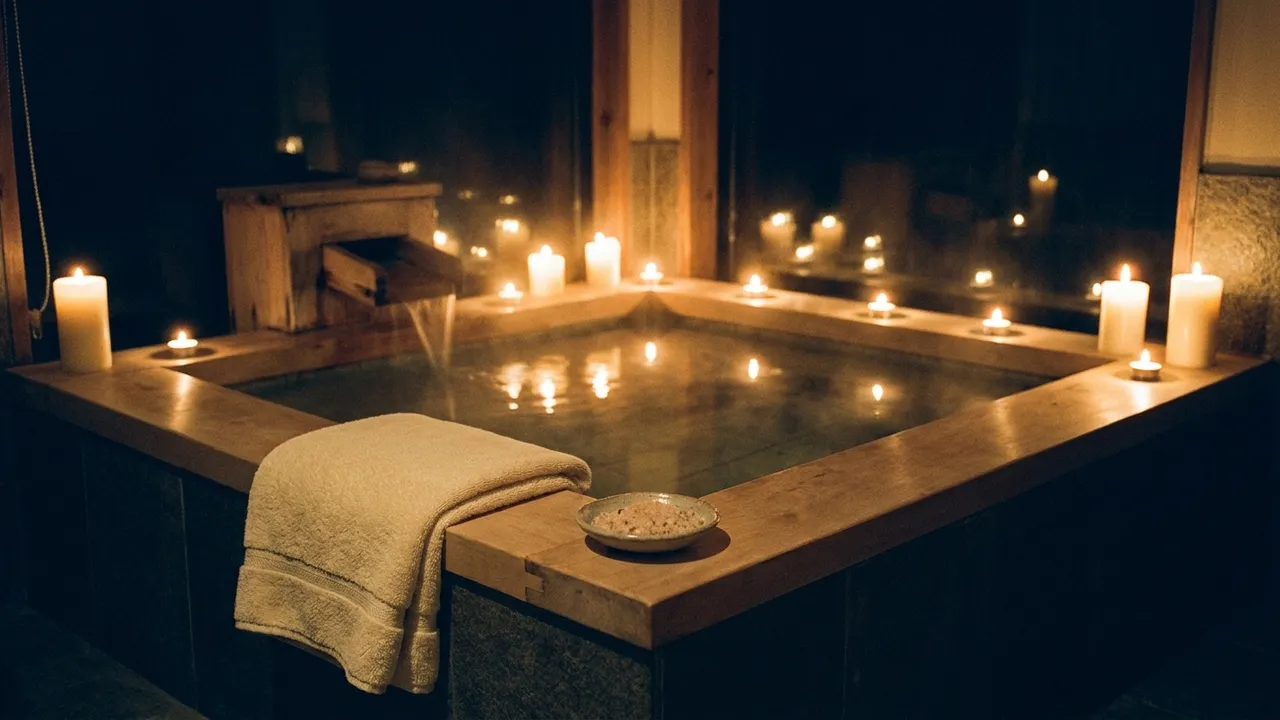
- Bright overhead light. Dim the lights or use a candle. Light is the other master signal of the body clock, and an overlit bathroom at 9pm reads as midday.
- Water that is too hot. Above about 42 degrees the bath becomes cardiovascular exercise, raises heart rate, and can delay rather than promote sleep.
- Alcohol. A nightcap in the tub feels indulgent and fragments the second half of your night's sleep.
A Simple Evening Sequence
- 90 minutes before bed: run the bath at 38 to 40 degrees and dissolve two to three scoops of mineral salts.
- Soak for 20 minutes: lights low, phone in another room, nothing to do and nowhere to be.
- Rest for 10 minutes after: wrap up warm and lie down while your core temperature begins its slide.
- Lights out on schedule: the cool-down does the rest.
If you want the full philosophy behind the ritual, our guide to onsen bathing covers the tradition this all descends from. And if your bathroom is missing the minerals, Miyomi's Yuzu & Green Tea blend was designed for exactly this hour of the day. Join the waitlist.