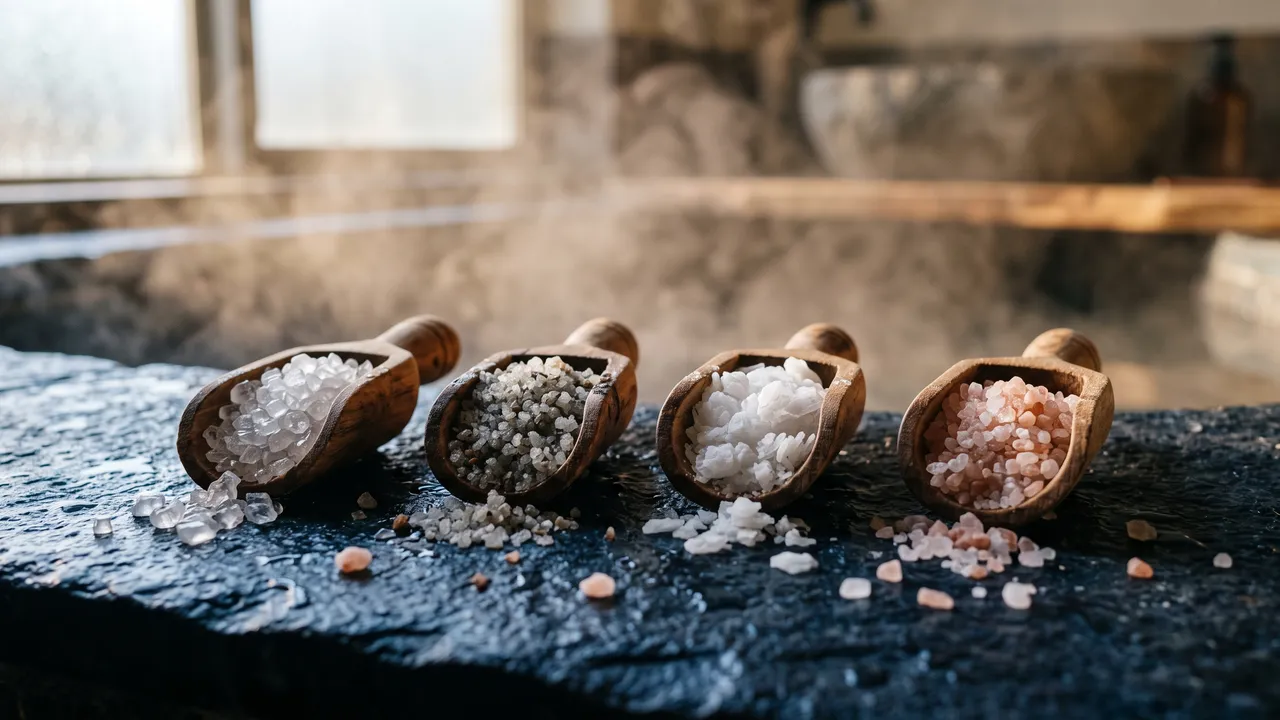
Stand in front of the bath aisle and the jars look almost the same: white or grey crystals, sometimes pink, usually with the word magnesium somewhere on the label. But Epsom salt, magnesium flakes and Dead Sea salt are three different things, and pink or sea salt is a fourth. They dissolve differently, feel different in the water, store differently and cost very different amounts.
Epsom salt is magnesium sulfate. Magnesium flakes are magnesium chloride. Dead Sea salt is a mix of chlorides that changes from one producer to the next. Pink and sea salt are mostly sodium chloride, the same compound as table salt. All four make a pleasant bath, and none has good evidence behind the idea that your skin soaks up magnesium from the water.
Epsom Salt: Magnesium Sulfate
Epsom salt is magnesium sulfate heptahydrate, MgSO4·7H2O: magnesium sulfate with seven water molecules locked into each crystal. It takes its name from Epsom in Surrey, England, where it was found in the water of a mineral spring in the 1600s. As a mineral it is called epsomite.
In the bath it is the plain, dependable option. The crystals are clear to white, dissolve fully in warm water and have no smell of their own. It is also one of the cheapest salts per kilogram, which is why so many bath salt blends, ours included, use it as the base.
Magnesium Flakes: Magnesium Chloride
Magnesium flakes are magnesium chloride hexahydrate, MgCl2·6H2O. The natural mineral is called bischofite, and bath flakes are usually made by evaporating magnesium-rich brine.
You notice the difference as soon as you open the bag. Magnesium chloride is deliquescent: it pulls so much moisture from the air that it eventually dissolves in it. Leave the bag open in a steamy bathroom and the flakes clump, then turn wet. In the water they give a slippery, almost oily feel that Epsom salt doesn't. Some people love it; others find it leaves skin feeling tacky until they rinse. Keep flakes sealed, rinse off after, and expect to pay more per kilogram than for Epsom salt.
Dead Sea Salt: A Mix of Chlorides
Dead Sea salt is what's left when water from the Dead Sea, the salt lake at the lowest point on land, is evaporated. The lake is far richer in magnesium, calcium and potassium than the ocean, so its salt is a blend rather than one compound: magnesium, sodium, calcium and potassium chlorides, with some bromide. The proportions shift with how the salt is harvested and dried, so one brand's Dead Sea salt is not the same as another's.
Coarse Dead Sea salt is often grey or off-white and can leave a little grit in the bottom of the tub. It also tends to come with the biggest promises on the label, many of them about skin conditions. In Australia, a bath salt sold as a cosmetic can only talk about how a bath looks, smells and feels, so read stronger claims on imported jars with care.
Pink Salt and Sea Salt: Mostly Sodium Chloride
Pink Himalayan salt and sea salt are mostly sodium chloride, the same compound as table salt, with small amounts of other minerals. Those minerals give pink salt its colour. When Australian researchers tested 31 pink salts bought in Sydney, Canberra and Coffs Harbour, the mineral content varied widely from sample to sample, and one contained lead above the limit Food Standards Australia New Zealand sets for food.
For a bath, sodium chloride is fine. Salt water is pleasant to soak in, and pink salt looks lovely in a jar. Just don't buy it for the magnesium.
"All four make a pleasant bath. The real differences are in feel, storage and price."
Does Your Skin Absorb the Magnesium?
This is the idea behind most magnesium bath marketing, and the evidence for it is thin. A 2017 review in the journal Nutrients went through the research on magnesium through the skin and concluded that promoting it is scientifically unsupported. Keeping water, and what's dissolved in it, out of the body is what skin is for.
So choose on what you can actually notice: how the water feels, how the salt keeps and what it costs. Our guide to magnesium bath soaks goes further into the research, and into what a warm soak does on its own.
How to Choose
- For an everyday soak: Epsom salt. Inexpensive, dissolves cleanly, no smell, easy to store.
- For a silkier feel: magnesium flakes, if you don't mind rinsing after and keeping the bag sealed.
- For a sea-water bath: Dead Sea or sea salt. Check whether it's fine or coarse, since coarse salt dissolves slowly.
- For looks: pink salt, or a little pink mixed through Epsom salt.
- Whatever you pick: about a generous half cup in a full bath, dissolved under the running tap. Our how-to guide covers the rest, and our Australian buying guide explains how to read a label.
Where Miyomi Fits
Miyomi is built on Epsom salt, for the reasons above: it dissolves cleanly and doesn't need explaining. We add bicarb soda to soften the water, green tea extract, and steam-distilled yuzu peel oil for the scent. No dyes, and no promises about magnesium.
We have not opened yet. The first 100 on the waitlist get a founder code for $10 off. Join the waitlist.