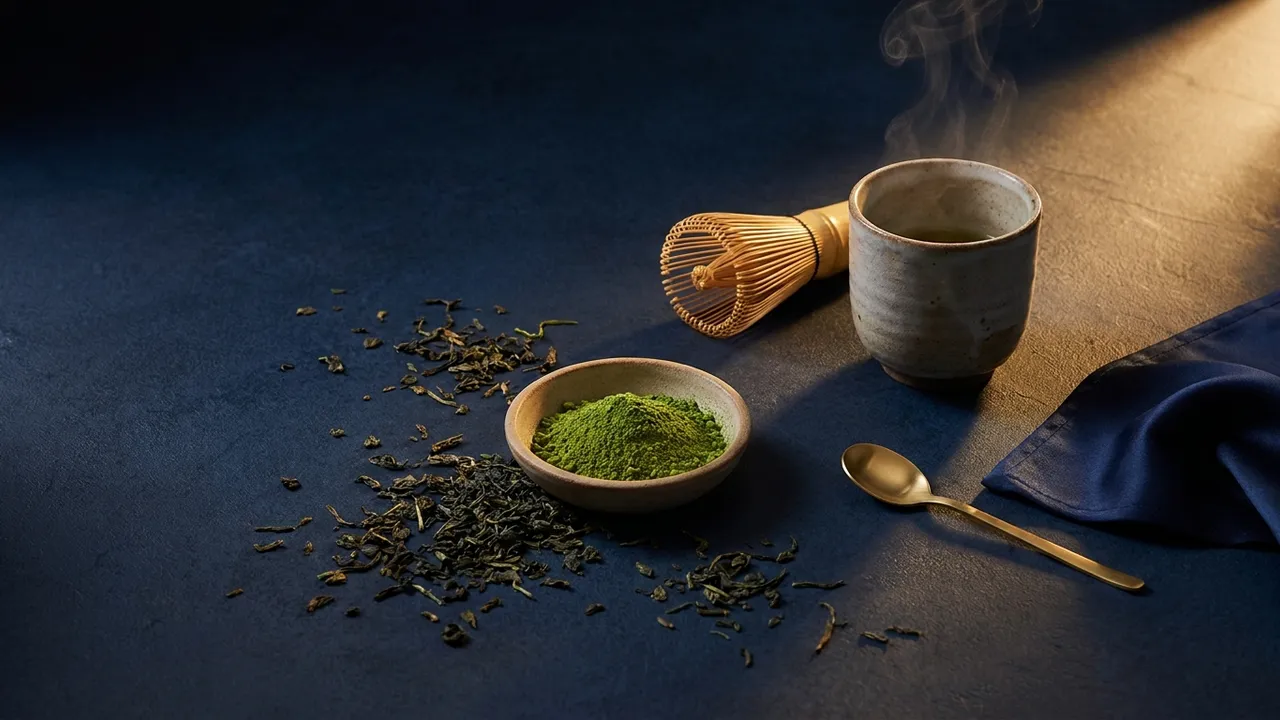
Green tea turns up in a lot of skincare, from face serums to body wash, and it earns its place. The leaf is full of antioxidants, and there's a large body of research on them. We put sencha green tea extract in every pouch of Miyomi, so we want to be straight about what it does in a bath, which is a very different setting from a serum.
What's in Green Tea
Green, black and oolong tea all come from the same plant, Camellia sinensis. Green tea is heated soon after picking, which stops the leaves oxidising and keeps a group of compounds called catechins intact. The main one is epigallocatechin gallate, usually shortened to EGCG. Black tea is left to oxidise, and most of its catechins turn into the compounds that give it a darker colour.
Sencha is the everyday green tea of Japan: leaves that are steamed, rolled and dried, then brewed loose. Matcha is a different style, grown in shade and ground into a powder. Both contain catechins. Miyomi uses a sencha leaf extract.
Why Skincare Uses It
Antioxidants help protect skin from the everyday wear of sun, pollution and dry air, which shows up over time as dullness and rough texture. Tea is one of the most researched plant sources of them in cosmetics. A 2019 review of tea in cosmetics found tea extracts used for their antioxidant properties in creams, lotions, cleansers and hair products.
Most of that research looks at products that stay on the skin, like creams and serums. That matters once you put green tea in a bath.
What Changes in a Bath
It's diluted
A full tub holds around 150 litres. Two scoops of bath salts spread whatever is in them through all of that water, so the amount of extract reaching any patch of skin is small. Then you get out and towel off, so nothing stays on the way a serum does.
Warm water doesn't "open your pores"
You'll often read that a warm bath opens pores so ingredients can sink in. Pores don't have muscles, so they can't open and close. Warm water softens the outer layer of skin for a while, but that's a long way from carrying an extract deep into it.
If you want green tea working as an antioxidant on your face, use a leave-on product. In a bath, green tea extract plays a supporting role. It adds a soft, green note to the scent and sits alongside the Epsom salts and bicarb soda, which do most of the work on how the water feels.
Green Tea Baths in Japan
Green tea is part of daily life in Japan, and now and then it ends up in the bath. Hakone Kowakien Yunessun, a hot spring theme park in Hakone, has run a green tea bath alongside baths of coffee, wine and sake. It's a novelty, but it says something about how ordinary green tea is there, and how naturally it pairs with a long soak. For the real thing, our guide to onsen at home covers how Japanese hot spring bathing works.
What Actually Helps Dry Skin in the Bath
For skin that feels soft after a bath, the method matters more than any single ingredient. Keep the water around 38 to 40°C, leave out bubble bath, soak for about 20 minutes, then moisturise within three minutes of getting out. Our guide to bath salts for dry skin goes through each step.
Who Should Take Care
Green tea extract is gentle for most people, but any plant extract can bother sensitive skin. If you react easily, patch test first. Dissolve a pinch of bath salts in a little water, dab it on your inner forearm and wait a day. Skip salt baths on broken skin.
Using Miyomi
Miyomi is Epsom salts blended with bicarb soda, sencha green tea extract and cold-pressed yuzu peel oil. The yuzu gives it most of its scent, and the green tea sits quietly underneath. Two scoops make a full bath.
Join the list and the first 100 get a founder code for $10 off.