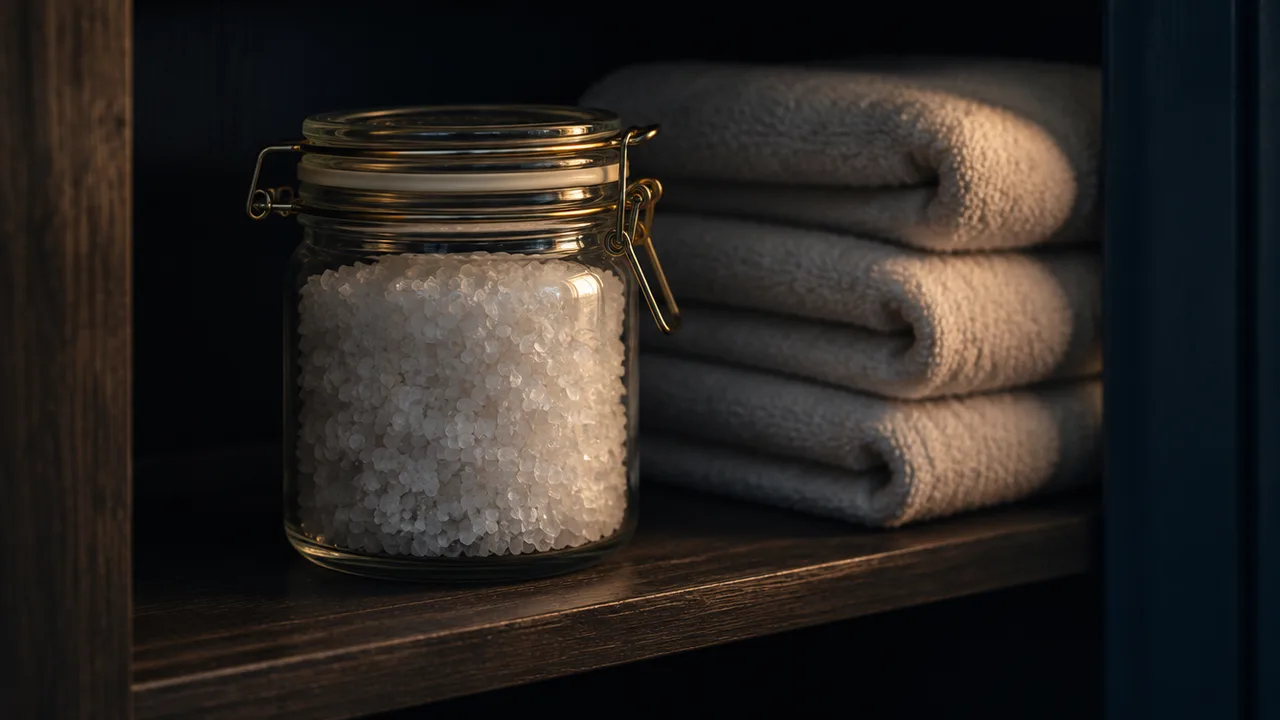
Short answer: the salt itself does not expire. It is a mineral, and minerals have been sitting in the ground for rather a long time without going off. What ages is everything you put around the salt.
That distinction matters, because it tells you what to look at when you find a forgotten pouch at the back of the cupboard, and whether it is still worth using.
What Does Not Age
Magnesium sulfate, sea salt and Himalayan salt are stable compounds. Kept dry and sealed, they are effectively indefinite. There is no microbial risk, because salt is one of the oldest preservatives we have. Nothing grows in it.
So a plain, unscented salt is as good in three years as it was on day one, assuming it stayed dry.
What Does Age
Almost everything else in the pouch.
- Essential oils and fragrance. These oxidise on contact with air and light. Citrus oils fade fastest. You will usually notice a scented salt smelling flatter after 12 to 24 months, long before anything is wrong with it.
- Dried botanicals. Petals and leaves brown, go dusty and can smell musty. They are the first thing to look tired in a pretty jar.
- Added oils or butters. Anything with a plant oil in it can eventually turn rancid, which smells like old crayons. That is the one smell worth throwing a product out over.
- Colour. Some dyes fade on a sunny windowsill. Cosmetic only, but it tells you the pouch has been badly stored.
Australian cosmetic products often carry a small open-jar symbol with a number, such as 12M or 24M. That is the period after opening, not a hard expiry. It is the manufacturer's estimate of how long the product stays at its best once air gets to it. A batch code without any date is normal and not a warning sign.
Why Bath Salts Clump
This is the question behind most searches on the subject, and the answer is reassuring: clumping is not spoilage.
Salts are hygroscopic, which means they pull moisture out of the air. A bathroom is the most humid room in the house, and a pouch left open on the edge of the bath is sitting in steam twice a day. The crystals draw in water, partially dissolve at the surface, and fuse into a solid block as they dry.
The salt is chemically unchanged. Break the block up with the handle of a spoon and it works exactly as it did before. It dissolves no differently in a hot tub.
"A clumped pouch is not a spoiled pouch. It is a pouch that has been living in a bathroom, which is the one room you should not keep it in."
Where to Actually Store Them
The irony of bath products is that the bathroom is the worst place for them.
- Somewhere dry and dark. A bedroom cupboard or a linen press beats a bathroom shelf every time.
- Sealed properly. Press the air out of a resealable pouch before closing it, or decant into a jar with a rubber seal.
- Off the windowsill. Sunlight fades colour and degrades fragrance faster than anything else.
- With a dry scoop. A wet hand or damp spoon in the pouch is how a clump starts. Keep a dedicated scoop nearby.
If You Live Somewhere Humid
Brisbane, Darwin, Cairns and the north coast make this harder. A summer wet season can clump a pouch in weeks rather than months. An airtight glass jar with a rubber gasket is worth the small cost, and a silica sachet tucked in the cupboard, not in the salt, helps. Inland and southern homes have a much easier time of it.
When to Actually Throw Them Out
Rarely, but these are the signs that mean it.
- A rancid or sour smell. Usually an added plant oil that has turned. Not dangerous, but unpleasant, and it will follow you into the water.
- Anything fuzzy. Mould in salt means a real amount of water got in, most likely a wet scoop or a leaking container. Bin it.
- A pouch that got genuinely wet. Not humid, wet. Once it has taken on standing water, the botanicals in it can spoil.
Faded scent on its own is not a reason to throw anything out. It is a reason to use it up. A tired scented salt still does everything a plain one does, and works just as well in a foot soak if the bath has lost its appeal.
Using Miyomi
Miyomi comes in a 1kg resealable pouch rather than a jar or a sachet, which is the practical choice for exactly the reasons above: you can press the air out, it closes properly, and it is easy to keep somewhere other than the bathroom. If you want to know what else to look for before you buy anything in this category, our Australian buying guide covers labels and what to avoid.
We have not opened yet. The first batch is being blended now, and the waitlist gets first access plus $10 off a first order. Join the waitlist.